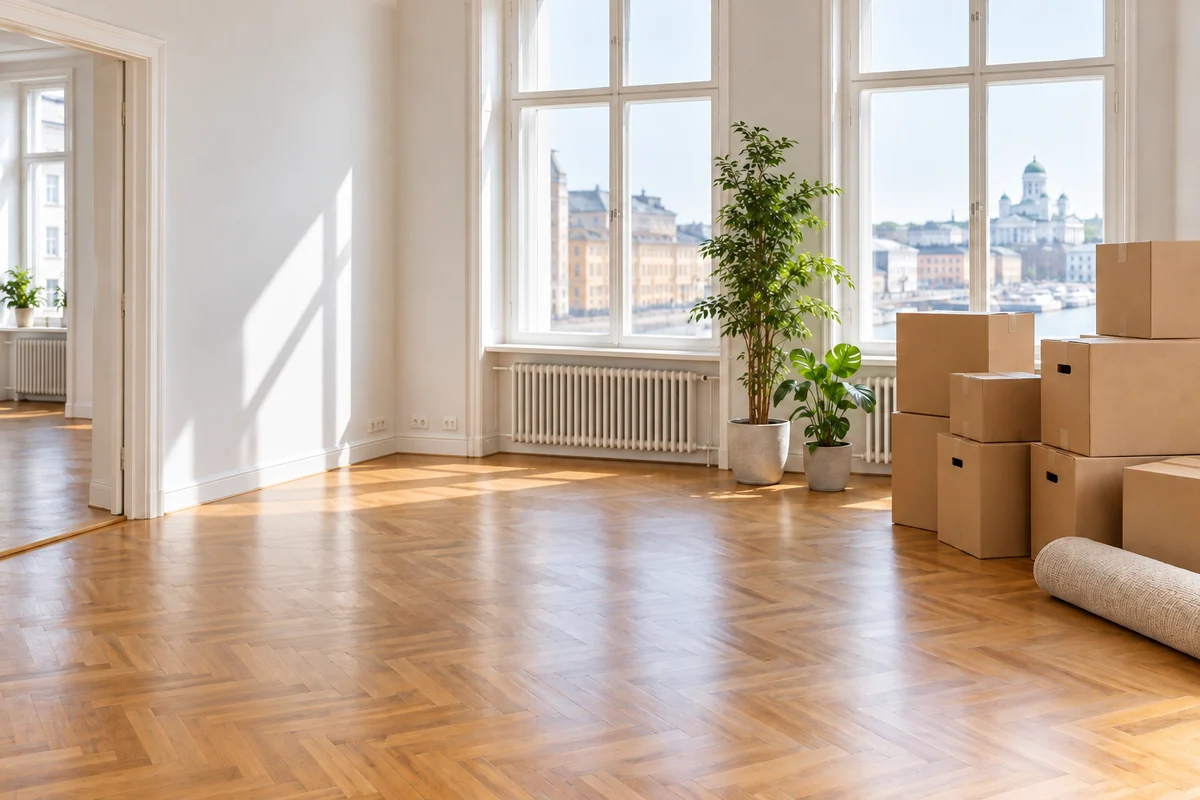
Calculate your boxes
Choose your home size, the number of people and how much you own. The calculator gives a rough estimate based on a standard 50–60 litre moving box.
Box calculator
Add storage room, cellar and attic items separately.
Get a quote for your moveRules of thumb by home size
These numbers get you started. Books, kitchenware and storage-room items can raise the count considerably, and with few belongings you’ll manage at the lower end.
| Home size | Boxes |
|---|---|
| Studio or under 35 m² | 15–30 |
| 35–60 m² | 30–50 |
| 61–90 m² | 50–70 |
| Over 90 m² or a family home | 70–100 or more |
Estimate for standard 50–60 litre boxes.
Room by room
For a closer estimate, count room by room. The figures are rough and vary with how much you own.
| Room | Boxes |
|---|---|
| Kitchen | 8–15 |
| Living room | 5–10 |
| Bedroom | 5–10 |
| Children’s room | 5–10 |
| Bathroom | 2–4 |
| Hallway | 2–3 |
| Storage room, cellar or attic | 5–15 |
What takes the most boxes?
The kitchen, books, clothes and the storage room usually take the most space. The kitchen has many small, fragile items that need padding. Books are heavy, so they are spread across small boxes. Clothes can partly travel in bags or wardrobe boxes.
Box size and weight
A standard moving box holds about 50–60 litres. Pack books and other heavy things in small boxes and light things in larger ones. Don’t fill a box so heavy that you can’t lift it yourself.
Tape the bottom of each box across both seams so it holds. Fill gaps with paper so the box doesn’t collapse in a stack.
How many boxes fit in a van?
In theory, a 10 m³ load space holds more than 150 boxes of 60 litres. In practice, furniture takes most of the space. With a sofa, bed and wardrobes on board, there is far less room for boxes. Stack the heaviest boxes at the bottom.
- Load space
- 10 m³
- Volume of one box (60 l)
- 0.06 m³
- Boxes at most (10 ÷ 0.06)
- about 166
Fewer in practice, because furniture takes space and gaps remain between boxes.
Buy, rent or reuse?
There are three ways to get boxes, and each has its advantages.
| Option | Good | Keep in mind |
|---|---|---|
| New cardboard boxes | Sold in many shops, light | Single-use, soften in damp |
| Rented plastic boxes | Sturdy, stack well, no tape | Must be returned on time |
| Used boxes | Often free and eco-friendly | Condition and size vary |
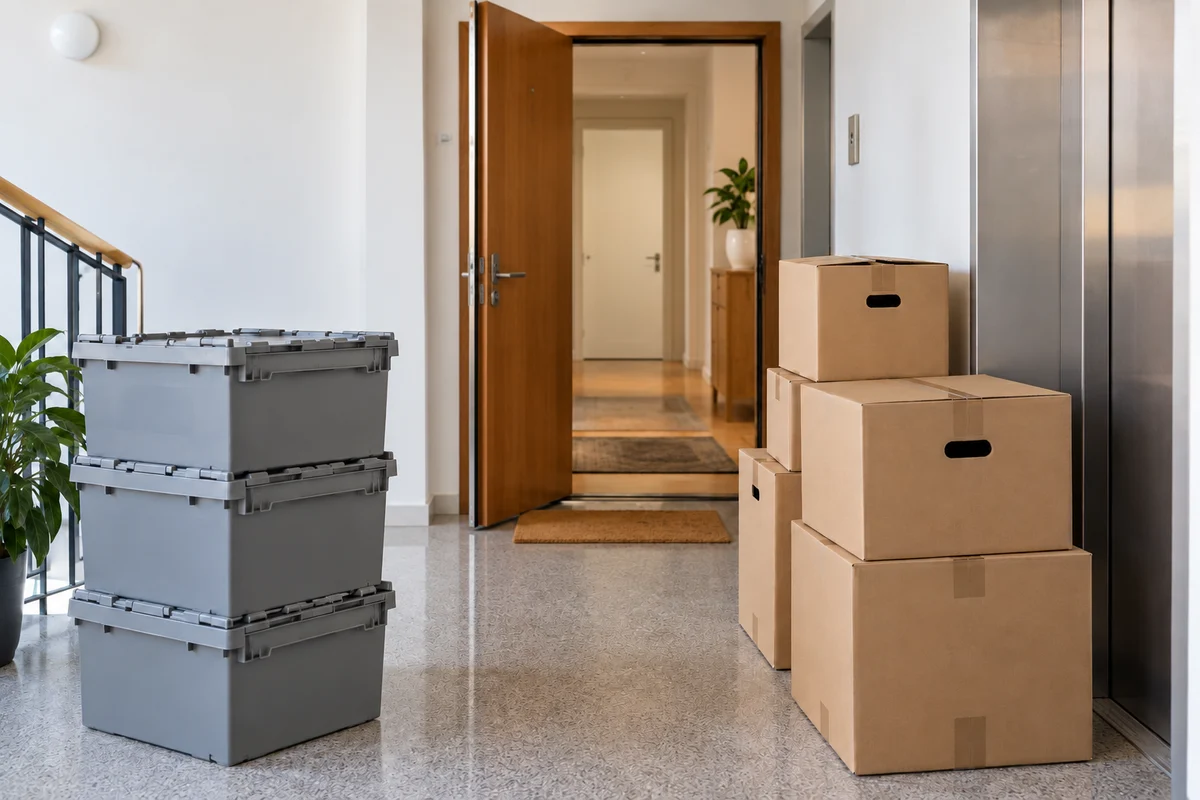
Special boxes for awkward items
Besides standard boxes, some things are best packed in their own way.
- A wardrobe box or garment bag for clothes on hangers
- A low, sturdy box for books
- A picture or mirror box, or two sheets of cardboard and corner protectors
- The original box or a moving blanket for the TV
- A divided box for glasses and bottles
How to stack boxes
Stack heavy boxes at the bottom and light ones on top. Keep stacks low enough that the top box is easy to lift down, and put boxes with fragile contents on top. When boxes are the same size, stacks stay stable and more fits in the van.
After the move
Once the boxes are unpacked, flatten the cardboard ones and take them to your housing company’s cardboard recycling or to a Sortti station, where cardboard is accepted free of charge. Return rented boxes on time. Boxes in good condition can also go to the next person who is moving.
Boxes by type of move
The number of boxes also depends on the kind of move.
| Move | Keep in mind |
|---|---|
| Student flat | Often 15–25 boxes; clothes and the kitchen take the most |
| A couple’s one-bedroom flat | Often 30–50 boxes; books and the kitchen add to it |
| Family with children | Often 70 boxes or more; toys and storage add to it |
| Small office | Estimate per workstation; archives and paper take a lot |
Rough estimates for standard 50–60 litre boxes.
Get boxes in good time
Get your boxes a couple of weeks before the move, so you can pack rarely used things calmly. Better a few boxes too many than too few. Spare boxes can be returned, passed on or used in storage.
Carrying boxes safely
Lift a box with your legs, back straight and the box close to your body. Don’t twist your back while lifting. Carry heavy boxes in pairs or use a trolley, and keep routes clear so you can see where you step.
Boxes and your movers
Movers work fastest when boxes are closed, the same size and labelled. Open boxes and plastic bags slow loading, because they can’t be stacked securely. Give an estimate of your boxes in your quote request, so the company can book a suitable van.
Box sizes and uses
Moving boxes usually come in three sizes. A small box is for heavy things such as books, papers and dishes. A standard 50–60 litre moving box suits most things. A large box is good for light, bulky things such as pillows and duvets.
When boxes are the same size, they stack securely and more fits in the van. So get mostly one size, plus a few smaller ones for heavy items.
Tape and reinforce properly
The bottom is a box’s weakest point. Tape the centre seam and the edges so the tape forms an H. For heavy items, tape the bottom twice. Don’t fill a box so full that the lid bulges, because then it won’t stack and may collapse.
Keep boxes dry
Cardboard softens in damp. Store empty boxes flat in a dry place, and packed boxes indoors. If your storage is a damp cellar, bring packed boxes into the flat to wait for the move. Replace a box that has got damp before it is carried.
Boxes and the environment
Reusable plastic boxes and used cardboard boxes save material. When the move is over, give intact boxes to the next person moving and take damaged ones to cardboard recycling. Rented plastic boxes are returned, so they leave no waste at all.
Unpacking order in the new home
Unpack boxes in the order you need things. First the first-day bag, then bedding, the bathroom and basic kitchenware. Once daily life works, carry on room by room. Flatten empty boxes straight away, so floor space opens up and unpacking feels like progress.
Too many or too few boxes
If you run out of boxes, use bags and clothes for soft things, but don’t pack fragile items in plastic bags. If you have boxes left over, store them flat for next time or pass them on. Tell your movers if the number of boxes changes a lot from the quote, because it affects the van size.
Number your boxes and keep a list
When you have dozens of boxes, labelling by room isn’t always enough. Number every box and note on your phone or on paper what is in each. Then you know at once which box holds the coffee maker, the chargers or the children’s bedtime books.
The list also helps check that every box arrived. Count the boxes when loading and unloading, so nothing is left in the van or the old home.
| No. | Room | Contents |
|---|---|---|
| 1 | Kitchen | Plates and bowls (fragile) |
| 2 | Kitchen | Pots and frying pan |
| 3 | Living room | Books |
| 4 | Bedroom | Winter clothes |
| 5 | Bathroom | Towels and toiletries |
Books and papers take more than you think
A bookcase looks small, but books fill boxes quickly and weigh a lot. Pack them in small boxes and fill each only as far as you can carry it. Declutter before packing: old textbooks and read novels can go to library swap shelves or a flea market.
Sort papers and documents before the move. Important documents travel in your own bag; the rest can be packed upright in folders.
The kitchen eats the most boxes
The kitchen has many small, fragile things, so it usually takes the most boxes. Set aside plenty of boxes and padding for it.
- Plates on edge, wrapped in paper; glasses wrapped individually
- Pots nested, with tea towels in between
- Dry goods in closed jars or bags
- Sharp knives wrapped in thick paper and labelled
- Unopened drinks and tins in small boxes
Clothes: box, bag or wardrobe box?
Clothes are light but take space. Folded clothes fit in large boxes or sturdy bags. Clothes on hangers travel most neatly in a wardrobe box or garment bag. Soft textiles such as towels and scarves can pad other things, so you need fewer boxes.
Storage room, cellar and attic
Storage items are easily forgotten in a box estimate. Go through your storage in good time and decide what comes with you. Sports gear, seasonal decorations, tools and old things fill surprisingly many boxes.
If the storage is in another building or the cellar, mention it in your quote request. It affects the carrying distance and the time the move takes.
Check the box count before moving day
When packing is nearly done, count the finished boxes and compare them with the number in your quote request. If there are clearly more, tell your moving company in advance. Then there is enough room in the van and moving day doesn’t drag on.
Example: a one-bedroom flat room by room
A one-bedroom flat for two adults with an average amount of belongings might look like this:
| Room | Boxes |
|---|---|
| Kitchen | 12 |
| Living room | 8 |
| Bedroom | 7 |
| Bathroom | 3 |
| Hallway | 2 |
| Storage | 8 |
| Total | 40 |
An example. Your own number may be lower or higher.
Estimate before you ask for quotes
The number of boxes is one of the most important details for a moving company. It decides the van size and the estimated working time. Work out an estimate before asking for quotes and give every company the same figure, so the quotes are comparable. Read more about comparing quotes.
Boxes on the morning of the move
Once everything is packed, stack the boxes by room near the front door, but keep the walkway clear. Keep boxes with fragile contents on top of the stacks and the first-day bag separate. Then the movers can start straight away.
Moving boxes: frequently asked questions
Short answers:
- How many boxes does a studio need? Usually about 15–30.
- How many boxes fit in a van? In theory more than 150 boxes of 60 litres in 10 m³, fewer in practice.
- How heavy can a box be? Light enough for you to lift it safely yourself.
- Where can I get free boxes? Often at flea markets and on online marketplaces.
Boxes in a nutshell
Estimate the number from your home size and belongings, get boxes a couple of weeks ahead, and pack heavy things in small boxes and light things in large ones. Number and label boxes by room, tape the bottoms well and give your movers the box count in your quote request. Then the van is the right size and moving day goes without surprises.
Boxes and moving help
If packing feels overwhelming, packing help can be agreed separately. Say in your quote request which rooms you want to pack yourself and where you need help. A box estimate still helps plan the work and book the right van.
Pack systematically
Label every box with its destination room and main contents. Pack what you need on the first evening separately. Find more tips in our packing guide and moving checklist.
Useful official guidance
HSY: waste price list 2026 (in Finnish)Help with your move
Explore the service and tell us about your move. We agree the scope and price before confirming a booking.
Home movesGet a free moving quote