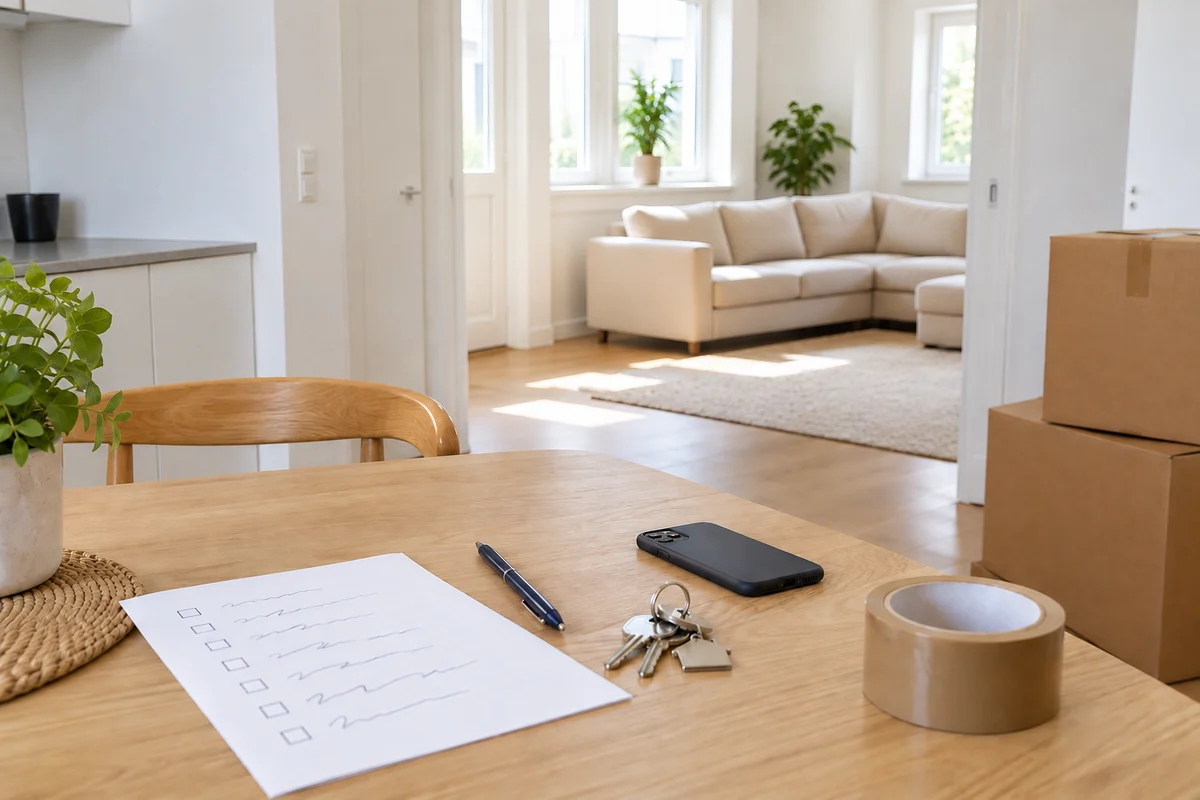
How to use this checklist
A move goes smoothly when things happen in the right order. This list runs week by week. If you have less time, start with the items that have a deadline: the key handover, emptying your old home and your change-of-address notice.
- 4–6 weeks beforeDate and quotesFix your moving date and ask for quotes.
- 2–4 weeks beforeContracts and declutteringElectricity, internet, insurance. Sell or donate what you don’t need.
- 1–2 weeks beforeNotices and accessChange of address, housing company, parking.
- Final daysFinish packingKitchen, appliances and taking furniture apart.
- The night beforeFirst-day bagKeys, medication, chargers and a change of clothes.
- Moving dayOne contact personWalk-through, loading and final check.
- First weekChecksDamage, smoke alarm and remaining notices.
Your moving timeline
Choose your moving day to see a dated list.
A guideline schedule. The change-of-address window is set by law.
Get a quote for this date4–6 weeks before: fix the date and get quotes
Put your moving day, the key handover and the deadline for emptying your old home in one calendar. Leave time for cleaning too. If you are moving in late summer, book movers especially early: August is Finland’s busiest moving month.
- Ask for quotes on the same details and compare them carefully.
- Estimate your belongings and how many boxes you need.
- Start decluttering: what will you sell, donate or recycle?
- If you need a day off for the move, agree it with your employer.
2–4 weeks before: contracts and decluttering
Contracts don’t move to your new address by themselves. Sort them out now, so your new home has electricity and internet on moving day.
- Electricity: give notice at least two weeks before. Moving usually lets you end even a fixed-term contract.
- Internet: check whether your contract is fixed-term and whether the service works at the new address.
- Home insurance: update the policy for your new home. Cover may apply at both addresses for a while, but terms vary.
- Take donations and recycling away. See the options in our local guide.
- Get boxes and start packing things you rarely use. See the packing guide.
1–2 weeks before: notices and access
File your change of address with Posti and the Digital and Population Data Services Agency. One notice covers both. Tell your housing company too, and check the house rules on booking the lift.
Find out where the van can stop at both addresses, and reserve street space if needed. Give your movers the floors, lifts, door codes and parking options.
- Change-of-address notice to DVV and Posti
- Parking for the moving van and street reservations
- Measuring large furniture and the stairwell
Final days: finish packing
Pack the kitchen near the end and leave out only everyday dishes. Defrost and dry the freezer in good time and empty the fridge. Fit the washing machine’s transport bolts before the move. Take apart furniture that won’t fit through doors in one piece, and put the screws in a bag taped to the furniture.
Label every box with its destination room and main contents. That way things go straight to the right room.
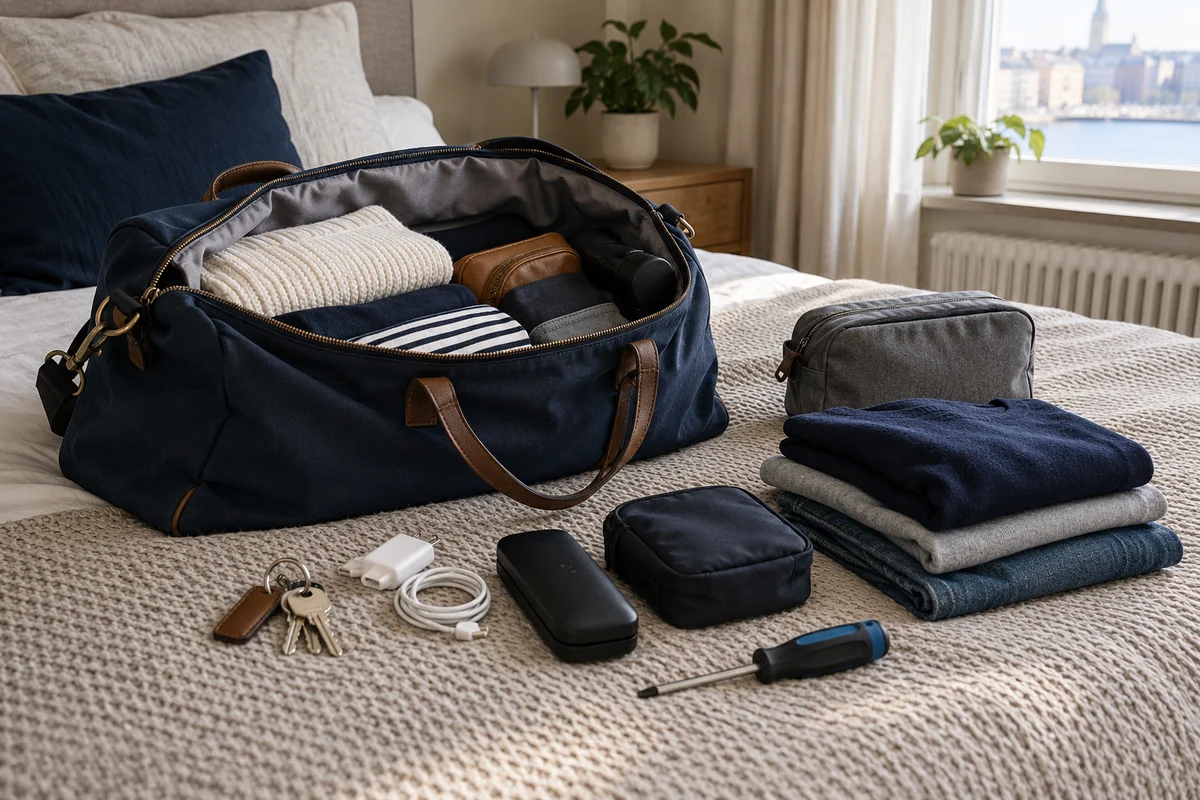
The night before: your first-day bag
Pack a separate bag with what you need before the boxes are unpacked. Keep it with you, not in the moving load.
- Keys, identification and important papers
- Medication and glasses
- Phone, chargers and an extension lead
- A change of clothes and toiletries
- Toilet paper, a hand towel and washing-up liquid
- Basic tools: a screwdriver, Allen keys and a knife
- Snacks and something to drink
Moving day: one clear contact person
Agree who answers the movers’ questions. Walk through together what is going and what stays. Once the van is loaded, check cupboards, storage areas, the cellar and the balcony one last time.
At the new home, tell the movers which room each thing goes to. Labelled boxes make unloading much faster.
Your first week in the new home
Start with the essentials: the bed, basic kitchen items and the bathroom. Check your belongings and furniture, and report any damage to the moving company as soon as possible. Test the smoke alarm and find the main water and electricity switches.
Update your address with your bank, employer, school and subscriptions. Return rented boxes on time and take empty cardboard boxes to recycling.
If you are moving out of a rental
Give notice on your lease in good time: for an open-ended lease, a tenant’s notice period is one month, counted from the last day of the month in which notice is given. Agree the key handover and inspection with your landlord, and leave time for final cleaning.
Moving-day schedule
A well-planned moving day runs like this:
- Morning: last items into boxes, beds taken apart and bedding packed.
- When the movers arrive: walk through what is going and what stays.
- Loading: furniture and appliances first, then boxes.
- Transport: go to the new address yourself and open the doors in advance.
- Unloading: direct things to rooms according to the box labels.
- Evening: assemble the bed, reconnect the fridge following the manufacturer’s instructions and unpack the first-day bag.
If you bought or sold a home
When you buy or sell a home, moving day depends on when possession is handed over under the deed of sale. Check the deed for when you get the keys to the new home and when the old one must be empty. If the dates don’t line up, you may need temporary storage.
Agree the time of the key handover with the agent or seller, and book your movers around it. A moving van shouldn’t be waiting at the door for keys.
Moving with children
Tell your children about the move early and involve them in the planning, for example packing their own room. Look into day care and school places in the new area in good time. On moving day, arrange a babysitter or something fun for the children away from the carrying route.
Pack your child’s important things in the first-day bag and set up the children’s room among the first rooms in the new home.
Moving with a pet
On moving day, doors are open and strangers come and go, which can stress a pet. Take your pet to a sitter or shut it in a quiet room and put a note on the door so nobody opens it by mistake. Pack its food, bowls and bed last and unpack them first, so the new home quickly feels familiar.
The whole checklist at a glance
Copy this list and tick items off as you finish them.
- Moving day and key handover in the calendar
- Quotes requested and movers booked
- Lease terminated, if you rent
- Electricity contract moved or ended
- Internet ordered for the new address
- Home insurance updated
- Change of address filed with DVV and Posti
- Housing company and property manager informed
- Lift booked and parking sorted
- Belongings decluttered and recycled
- Boxes obtained and packed
- Freezer defrosted and washing machine transport bolts fitted
- First-day bag packed
- Old home cleaned and keys returned
Moving to another town
When you move to another municipality, your municipality of residence changes based on your change-of-address notice. Your health centre changes with it, and your municipal tax changes from the start of the following year. Look into day care, schools and local waste arrangements in the new town in good time.
On a long move, moving day is longer, so allow time for driving and unloading too.
The first month
The weeks after a move go on unpacking and getting everyday life going. During the first month, check these:
- Did you get the rental deposit for your old home back?
- Are bills arriving at the right address?
- Has the old electricity contract ended?
- Are all boxes unpacked and rented boxes returned?
- Have you booked a sauna turn or parking space, if you need one?
Moving into a rental: checks
When you move into a rental home, go through it as soon as you get the keys. Photograph and note any damage or defects and report them to your landlord in writing. That way you won’t be held responsible for damage that was there before you.
Keys and door codes
Count the keys to your old home and return them all as agreed. Ask how many keys you’ll get for the new home and whether you need door or gate codes. If you bought the home, having the locks re-keyed can be a good idea, because you don’t know who still has old keys.
Checklist for families with children
For a family move, add a few items to the list:
- Applying for or transferring a day care or school place
- Updating child health clinic and health centre details
- Childcare for moving day
- A bag of favourite toys for each child
- Setting up the children’s room first
Checklist for an older person’s move
When the person moving is older, allow more time for preparation. Decluttering and letting go of things can be hard, so do it calmly and together. Agree who handles the notices and who will be there on moving day. Make sure medication, mobility aids and important papers travel along and are easy to reach in the new home.
Food and drink on moving day
Moving day is long. Have drinks and snacks for yourself and your helpers, and keep the coffee maker or kettle among the last things packed. Charge your phone the night before, because you’ll need it to stay in touch with the movers, your housing company and your landlord.
If something is forgotten
If you notice after the move that a notice wasn’t made, do it straight away. You can still file your change of address up to a week after moving. Electricity and home insurance can be corrected by calling the company. The sooner you fix things, the fewer the consequences.
Boxes and supplies in good time
Get boxes and supplies about three weeks before the move, so you can pack calmly. Estimate the number with our box calculator and get a few extra. You’ll also need tape, padding, markers and bags for screws. With supplies ready, packing goes on without interruptions.
Handing over your old home
Once everything has gone, the old home is cleaned and handed over. Go through every room, cupboard, storage room and the balcony so nothing is left. Close the windows, switch off the lights and return the keys as agreed. If the home is inspected, be there or agree the inspection with the landlord or buyer. Finally, take photos of the empty home for your records.
Preparing for a move: frequently asked questions
Short answers to the most common questions:
- How early should I start planning? About six weeks before is a good time, and earlier in summer.
- When must I file my change of address? At the earliest a month before, and at the latest a week after the move.
- Does everything need to be packed before the movers arrive? Yes. Boxes packed in advance speed up the move and keep the price in check.
- What if the moving date changes? Tell your movers, housing company and electricity company straight away, and correct your change of address if needed.
The most important tip
If you remember only one thing, make it this: deal with the dated items first. The key handover, emptying the old home, giving notice on a lease and the change of address are fixed dates that the rest of the move fits around. Once they are in the calendar, packing and other preparations are easy to schedule around them.
Look after yourself too
Moving is physically and mentally tiring, even when everything goes well. Leave time to rest and unpack calmly the day after the move. Ask friends or professionals for help with the parts that feel hardest, and give yourself time to settle into your new home.
Need help with your move?
Once you know what you are moving and when, get a quote for a home move. If you have only a little to move, see small moves and transport.
Useful official guidance
Finlex: Municipality of Residence Act (in Finnish)Posti: moving (in Finnish)Energy Authority (in Finnish)FINE: home insurance basics (in Finnish)Kiinteistöliitto (in Finnish)Statistics Finland (in Finnish)Help with your move
Explore the service and tell us about your move. We agree the scope and price before confirming a booking.
Home movesGet a free moving quote