Start early and in the right order
Packing usually takes longer than you expect. Start with things you won’t need before the move and leave everyday items until last. That way your home keeps working until the end.
- 3 weeks beforeRarely used itemsStorage, seasonal clothes and most books.
- 2 weeks beforeDecorPictures, spare dishes and textiles.
- 1 week beforeClothes and kitchenMost clothes and kitchen items.
- 2–3 days beforeRest of the kitchenThe bathroom and almost all everyday dishes.
- The night beforeLast itemsYour first-day bag and bedding.
Supplies
With supplies ready, packing goes on without breaks.
- Moving boxes in several sizes (see how many you need)
- Strong packing tape and a tape dispenser
- Padding: paper, bubble wrap or towels
- Markers or labels
- Stretch wrap and moving blankets for furniture
- Zip-lock bags for screws and small parts
The right box for each item
Heavy things go in small boxes and light things in large ones. A box that is too heavy is hard to carry and can break. Keep every box light enough for you to lift yourself.
| Box | Good for |
|---|---|
| Small | Books, papers, dishes, jars, tools |
| Medium | Kitchenware, toys, small appliances |
| Large | Pillows, duvets, clothes and other light items |
| Wardrobe bag or box | Clothes on hangers |
Kitchen: dishes and glasses
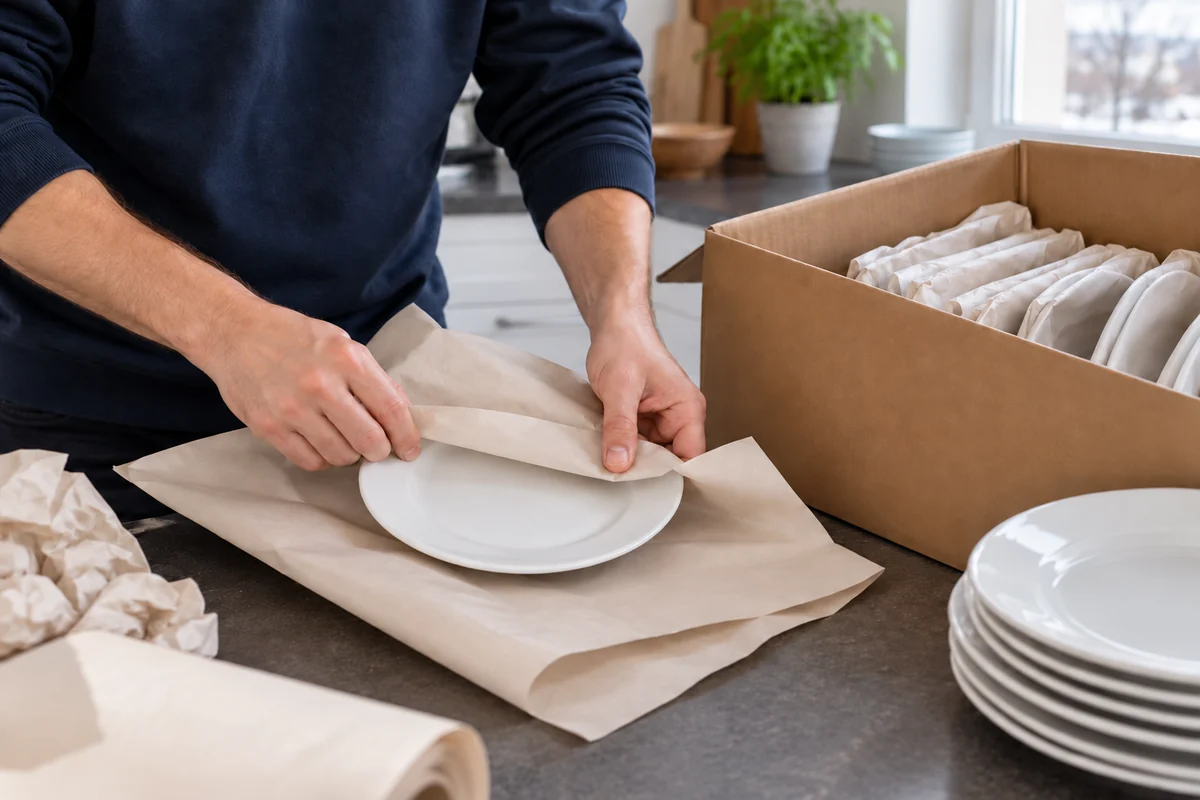
Wrap each plate in paper and stand the plates on edge in the box, like records on a shelf. Standing up, they take knocks better than in a stack. Fill glasses with paper and wrap them individually.
Put the heaviest dishes at the bottom and the lightest on top. Fill gaps with paper so nothing moves. Mark the box “fragile” and show which way is up.
Books, papers and valuables
Pack books in small boxes, because a large box of books quickly becomes too heavy. Lay books flat or spine down.
Keep important papers, valuables, jewellery and medication in your own bag. They travel most safely with you, not in the moving load.
Furniture and electronics
Empty chests of drawers so they are lighter to carry. Take apart furniture that won’t fit through doors in one piece, and put the screws in a bag taped to the furniture. Protect surfaces with moving blankets or stretch wrap.
Photograph cable connections before you unplug them. Pack the TV in its original box or protect it carefully with a blanket. Fit the washing machine’s transport bolts before the move.
Label your boxes
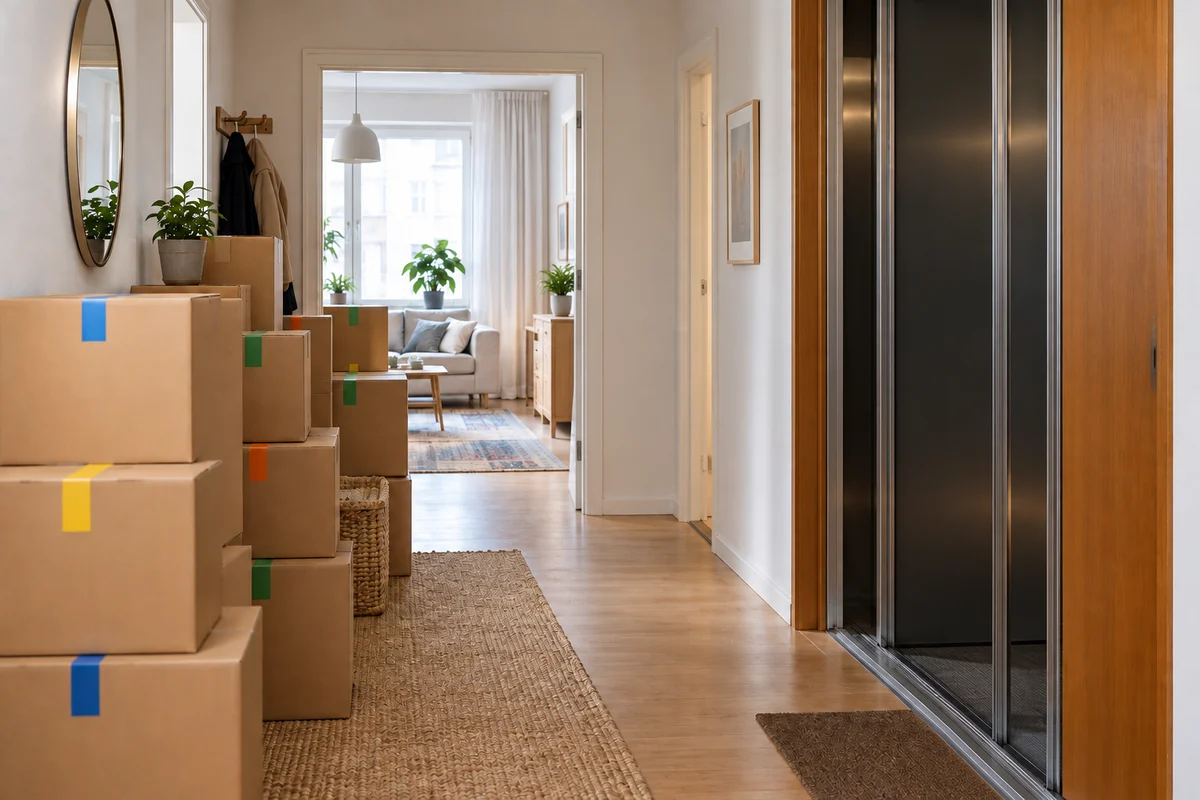
Good labels save the most time when unpacking. Write the destination room and main contents on two sides of every box, so the label is visible in a stack too. A colour code per room speeds up the movers’ work.
Room by room
Pack one room at a time and finish each box in one go. That way you always know what is already packed.
- Bedroom: clothes, bedding and bedside items. Leave one set of sheets until last.
- Children’s room: pack toys together with your child and leave favourite games out.
- Bathroom: close jars and bottles tightly and put them in a bag before the box.
- Storage room and cellar: declutter first, then pack. Tools go in small boxes.
Speed up your packing
Block out clear packing sessions in your calendar. Keep supplies in one place so tape and markers are always at hand. Fill each box completely and label it straight away. Declutter before packing: everything you give away is one less trip to carry.
What not to pack in the moving load
Some things travel best in your own car or with you.
- Medication, keys and identification
- Valuables, jewellery and important papers
- Perishable food
- Houseplants in cold weather (see our winter moving tips)
Your first-day bag
Pack keys, medication, chargers, a change of clothes, toiletries, toilet paper and basic tools in a separate bag. The full list is in our moving checklist.
Pack with less waste
A move easily creates a lot of packaging waste. Use towels, linen and clothes that need packing anyway as padding. Rented plastic boxes and used cardboard boxes reduce waste. When the move is over, flatten cardboard for recycling and pass intact boxes on.
The morning of moving day
On the morning of the move, pack only the last everyday items. Take the beds apart, pack the bedding in a large bag and check that every box is closed and labelled. Keep your first-day bag and valuables separate, so they aren’t loaded into the van by mistake.
Unpacking in your new home
Unpack the essentials first: the bed, the bathroom and basic kitchen items. Once the boxes are in the right rooms, unpacking goes calmly room by room. Keep one box empty for rubbish and packing materials, so the floor stays clear.
- First evening: bed, washing, chargers and the coffee maker.
- First day: basic kitchenware and clothes.
- First week: the rest of the kitchen, the living room and storage.
The most common packing mistakes
These mistakes slow a move down or break things:
- Boxes so heavy they can’t take being carried.
- Unlabelled boxes whose place has to be guessed.
- Gaps inside boxes, so the contents move.
- Packing left to the last minute, with the movers waiting.
- Screws lost because they were left loose from the furniture.
Set up a packing station
Set aside one table or patch of floor for packing. Keep boxes, tape, padding and markers there. With everything in one place, packing goes on without searching, and finished boxes can go straight into a corner of the room to wait.
Computers and important files
Back up your computer before the move. A device can be knocked in transport even when packed carefully. Carry a laptop in your own bag if you can. Pack a desktop computer in its original box or with padding, and label the cables so reassembly is easy.
Freezer, fridge and washing machine
Defrost the freezer a day or two before the move and dry it carefully, so no water is left inside. Empty the fridge and leave the door ajar to avoid smells. Fit the washing machine’s transport bolts before moving it. In the new home, reconnect fridges and freezers following the manufacturer’s instructions.
Houseplants and pet supplies
Houseplants travel best in your own car, especially in cold weather. Water them less for a few days before the move so the pots are lighter. Pack your pet’s food, bowls and bed last and unpack them first.
Clothes and textiles
Clothes on hangers stay neat in a wardrobe box or garment bag. Folded clothes fit in large boxes, and pillows and duvets can be packed tightly in bags. Soft textiles make good padding for fragile items.
Packing as a family with children
Families have a lot of belongings, and daily life carries on while you pack. Pack the adults’ rarely used things and the storage room first, and leave the children’s room until last. Let your child choose toys to travel in their own bag, and mark the children’s boxes with their own colour so they are unpacked first in the new home.
Packing in a small flat
In a small flat, boxes quickly take over the floor. Stack finished boxes room by room in one corner and keep a walkway clear. Finish packing one room at a time, so the flat stays usable. If storage space is short, get boxes gradually.
Taking furniture apart properly
Photograph each piece of furniture before taking it apart and keep the assembly instructions if you have them. Mark the parts with tape, for example with numbers, and put the screws and small parts in a bag taped to the furniture. Wrap panels and shelves in moving blankets so the edges don’t get damaged.
Pack yourself or get help?
Packing yourself saves money but takes time. Packing help can be worth it if time is short, you own a lot or the kitchen is full of fragile things. Many people pack light items themselves and agree help with the kitchen and valuable items.
Example: packing a one-bedroom flat in three weeks
On a three-week schedule, packing a one-bedroom flat stays under control without daily life stopping.
In the first week, pack the storage room, cellar, seasonal clothes and most books. Declutter at the same time and take donations and recycling away. In the second week, it’s the turn of decor, pictures, spare dishes and textiles, plus clothes you won’t need in the next few days.
In the final week, pack the rest of the kitchen, the bathroom and everyday items. Defrost the freezer, take the furniture apart and pack the first-day bag. When the movers arrive, only the bed and a few bags are left.
Valuable and sentimental items
Photos, heirlooms, jewellery and important documents are irreplaceable. Carry them yourself, in your own car or bag. If an item is large, such as a painting or antique furniture, tell the moving company in advance and agree how it will be packed and carried. Check too whether your home insurance covers valuables during the move.
Bathroom and cleaning supplies
Close shampoos, soaps and other liquids tightly and put them in a plastic bag before the box, so any leaks don’t ruin other things. Pack detergents and cleaning products in a different box from food. Leave a small cleaning bag at the old home for the final clean, and take a similar one to the new home.
Packing for a relative
If you are helping an older parent move, involve them in the decisions. Ask which things matter to them, and pack those carefully and clearly labelled. Make a list of what is in each box, so things are easy to find in the new home, and unpack familiar items first.
Packing in winter
In winter some things can’t take the frost. Carry houseplants, liquids, electronics and cosmetics in your own warm car if you can. Let electronics warm to room temperature before switching them on. Read more in our winter moving guide.
A final check before you leave
Once the van is loaded, walk through the home once more. Open every cupboard and drawer, look inside the oven and fridge, and check the storage room, cellar, balcony and attic. Take chargers out of the sockets and pick up the keys. Only then lock the door.
Packing: frequently asked questions
Short answers:
- How long does packing take? Usually longer than you think. Start with rarely used things about three weeks before.
- Can clothes stay in a chest of drawers? Light clothes can, but heavy chests of drawers are best emptied.
- Should I pack dishes myself? Yes, if you do it carefully. Packing help can also be agreed separately.
- Where should screws go? In a bag taped to the piece of furniture they came from.
Packing in a nutshell
Start early with rarely used things, use boxes of the right size, pad fragile items carefully and label every box with the room and contents. Keep valuables, medication and your first-day bag with you. When everything is packed before the movers arrive, moving day is quick and the price stays in check.
Ordering packing help
If you want help with packing, say in your quote request which rooms need packing and whether there are especially fragile or valuable items. Packing help is agreed separately and is best booked at the same time as the move.
Need packing help?
If you don’t have time to pack, packing help can be agreed separately. Mention it when you ask for a home-move quote.
Useful official guidance
Help with your move
Explore the service and tell us about your move. We agree the scope and price before confirming a booking.
Home movesGet a free moving quote